

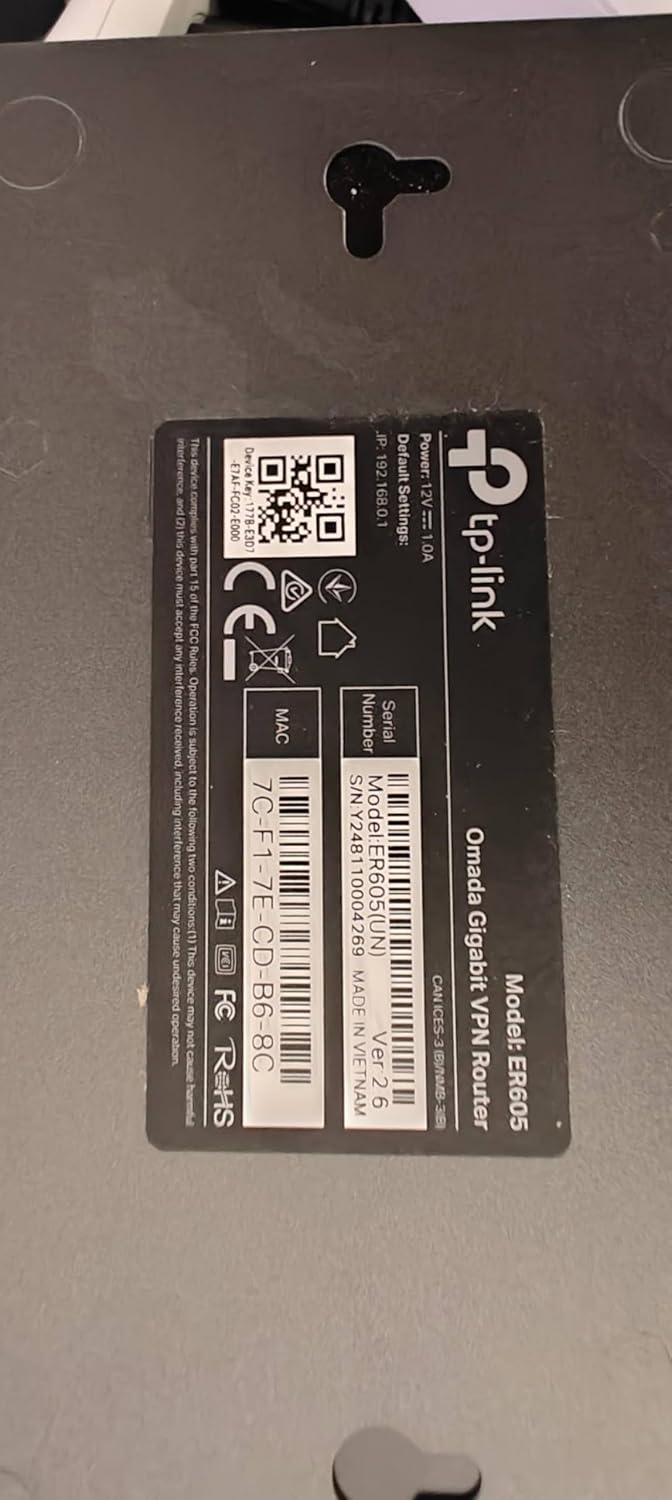
The Versatile Multi-WAN SD-WAN Device: A Connectivity Powerhouse
This Multi-WAN Gigabit VPN Router with Omada SDN stands out as an exceptional network solution for businesses and demanding home users alike, primarily due to its robust connectivity options and global compatibility. Engineered to provide not just speed but also unparalleled reliability, this device addresses the modern need for uninterrupted internet access and optimized bandwidth utilization. A cornerstone of its design is the inclusion of multiple Gigabit ports, offering remarkable flexibility in how you connect to the internet and manage your internal network traffic.
Key connectivity features that define this advanced router include:
- Five Gigabit Ports for Diverse Networking Needs: The router is equipped with a strategic port configuration: one dedicated Gigabit WAN Port, two versatile Gigabit WAN/LAN Ports, and two additional Gigabit LAN Ports. This setup immediately positions it as a highly adaptable hub. The ability to leverage up to three WAN ports simultaneously is a game-changer, allowing for multiple internet service providers to be connected. This dramatically enhances network resilience, ensuring that if one ISP experiences an outage, traffic can seamlessly failover to another. Beyond failover, these multiple WAN connections enable intelligent load balancing, distributing network traffic across providers to maximize overall bandwidth and improve user experience, especially in environments with high data demands.
- Integrated USB WAN Port for Mobile Broadband Backup: A forward-thinking addition is the USB WAN Port, which provides critical WAN backup functionality via a 4G/3G modem. This feature is invaluable for businesses operating in areas with less stable fixed-line internet, or for mobile operations requiring constant connectivity. By simply plugging in a compatible 4G/3G modem (a comprehensive list available on TP-Link’s website), users gain an immediate, wireless safety net, ensuring that even in the event of a total fixed-line failure, essential operations can continue without interruption. This level of redundancy is crucial for maintaining business continuity and minimizing costly downtime.
- Universal Voltage Compatibility (100-240V): Designed with global deployment in mind, this router boasts multiple voltage compatibility, operating flawlessly within a range of 100-240V. This seemingly small detail is significant for international businesses or for users who might travel or relocate, eliminating the need for voltage converters and simplifying deployment across different regions with varying power standards. It underscores the device’s versatility and readiness for a truly globalized operational landscape.
The amalgamation of these features creates a formidable connectivity profile, making this Omada SDN-integrated device an intelligent investment for any organization prioritizing uptime, bandwidth efficiency, and flexible network architecture. Its capacity to handle multiple WAN sources, including mobile broadband, ensures that your network remains robust and responsive, no matter the external conditions.
Robust Security with This Advanced Multi-WAN Solution
In today’s interconnected world, network security is not merely an optional add-on but a fundamental necessity. This Multi-WAN Gigabit VPN Router prioritizes the safeguarding of your network and data with an extensive suite of advanced security features, ensuring that your digital assets remain protected against a myriad of threats. The comprehensive security framework is designed to offer multi-layered defense, addressing vulnerabilities from various angles and providing peace of mind for administrators.
The router’s abundant security features include:
- Advanced Firewall Policies: At the core of its defense system are sophisticated firewall policies. These configurable rules allow network administrators to precisely control inbound and outbound network traffic, specifying which types of data are allowed or blocked based on various criteria such as source/destination IP addresses, port numbers, and protocols. This granular control is essential for preventing unauthorized access, isolating potential threats, and enforcing corporate network usage policies.
- DoS Defense (Denial-of-Service): The router incorporates dedicated DoS defense mechanisms, specifically designed to protect your network from malicious attacks aimed at overwhelming your system resources and rendering services unavailable. It intelligently detects and mitigates various DoS attack patterns, such as SYN flooding, Smurf attacks, and ICMP flooding, ensuring that legitimate users can always access network resources without interruption. This proactive defense is critical for maintaining service availability and operational continuity.
- IP/MAC/URL Filtering: To further enhance security and control, the device offers robust IP, MAC, and URL filtering capabilities. IP filtering allows you to block or permit traffic based on specific IP addresses, useful for restricting access to or from known malicious sources. MAC filtering provides an additional layer of access control at the hardware level, permitting only devices with authorized MAC addresses to connect to your network. URL filtering enables administrators to block access to specific websites or categories of websites, essential for improving productivity, conserving bandwidth, and preventing access to inappropriate or dangerous content.
- Comprehensive Protocol-Level Security: Beyond basic filtering, the router implements several protocol-specific security measures. This includes VPN Pass-through, which ensures VPN traffic (IPsec, PPTP, L2TP) can traverse the firewall without interference, maintaining secure remote connections. Furthermore, support for Application Layer Gateway (ALG) for FTP, H.323, PPTP, SIP, and IPsec ensures that these protocols function correctly and securely even behind the firewall, intelligently handling NAT traversal for complex applications.
- SPI Firewall (Stateful Packet Inspection): The Stateful Packet Inspection (SPI) firewall meticulously monitors the state of active connections, making intelligent decisions about which packets to allow through based on the context of an established connection. This offers a much higher level of security than basic packet filtering, as it can detect and block suspicious packets that don’t conform to the expected state of a connection, effectively thwarting intrusion attempts.
- DoS Defence, Ping of Death, and Local Management: Specific defenses like "Ping of Death" protection guard against a historical but still relevant type of attack where oversized or malformed ICMP packets can crash a system. Coupled with the broader DoS defense, these measures ensure resilience. Local Management offers secure, direct control over the device’s settings, limiting access to configuration interfaces to authorized personnel only, preventing unauthorized changes to security policies.
These interwoven security features collectively establish a formidable barrier against both internal and external threats, making this Multi-WAN router an indispensable asset for any organization serious about protecting its network infrastructure and sensitive data.
Empowering Remote Access and Secure Networking with This SD-WAN Router
The increasing prevalence of remote work and geographically dispersed teams has made highly secure and reliable VPN capabilities an absolute necessity for businesses of all sizes. This Multi-WAN Gigabit VPN Router with Omada SDN excels in this area, offering a comprehensive suite of VPN protocols that cater to a wide range of secure connectivity requirements, from site-to-site inter-office communication to individual remote user access. The robust VPN support ensures that your data remains encrypted and private, regardless of where your team members are located.
The router provides extensive VPN support, including:
- High-Capacity IPsec VPN Connections: Supporting up to 20 LAN-to-LAN IPsec VPN connections, this router is an ideal choice for organizations with multiple branch offices or distributed locations. IPsec (Internet Protocol Security) is renowned for its strong encryption and authentication protocols, providing a secure tunnel for data exchange between geographically separated networks. This capability allows businesses to create a unified, secure internal network across all their offices, facilitating seamless and confidential communication, resource sharing, and application access as if all locations were on the same local network. The high connection count means even growing businesses can scale their secure site-to-site connectivity without immediate hardware upgrades.
- Secure OpenVPN Connections: With support for up to 16 OpenVPN connections, the router offers a highly flexible and open-standard solution for both client-to-site and site-to-site VPNs. OpenVPN is celebrated for its strong security features, versatility, and ability to operate over various ports and protocols, making it resilient against network restrictions and firewalls. It is particularly popular for remote workers, enabling them to securely connect to the corporate network from any location using client software on their laptops, smartphones, or tablets. The 16 concurrent connections ensure that a substantial portion of your remote workforce can maintain secure access simultaneously, making it an excellent choice for modern distributed teams.
- L2TP VPN Support: The inclusion of up to 16 L2TP (Layer 2 Tunneling Protocol) VPN connections provides another reliable option for remote access. L2TP is often used in conjunction with IPsec for enhanced security, creating a secure tunnel for data transmission. It is widely supported across various operating systems and devices, offering an easy-to-configure solution for individual remote users to connect securely back to the main office network. This flexibility ensures compatibility with a broad range of user devices, simplifying deployment for IT departments.
- PPTP VPN Connections: The router also supports up to 16 PPTP (Point-to-Point Tunneling Protocol) VPN connections. While often considered less secure than IPsec or OpenVPN for modern applications due to known vulnerabilities, PPTP remains useful for legacy systems or specific applications where ease of setup and compatibility with older clients are paramount. Its inclusion provides a broad spectrum of choices, allowing administrators to select the most appropriate VPN protocol based on their specific security requirements, existing infrastructure, and client device capabilities.
These comprehensive VPN offerings collectively empower businesses to build a highly secure and flexible network infrastructure. Whether you need to securely link multiple offices, provide encrypted access for a large remote workforce, or support legacy remote access solutions, this router delivers the tools necessary to maintain data confidentiality and integrity across your entire network. The ability to support multiple types of VPN connections simultaneously allows for a tailored approach, optimizing security and performance for different user groups and operational needs.
The Strategic Advantage of Omada SDN Integration and Protocol Adherence in Your Network Hub
Beyond its robust hardware and individual security features, this Multi-WAN Gigabit VPN Router truly distinguishes itself through its integration with the Omada SDN (Software Defined Networking) platform and its adherence to critical industry standards and protocols. This combination elevates the device from a mere router to a strategic component of a scalable, centrally managed, and highly efficient network ecosystem. For businesses seeking streamlined management and future-proof infrastructure, the Omada SDN aspect delivers significant operational advantages.
Key advantages stemming from Omada SDN and protocol adherence include:
- Seamless Integration with Omada SDN: While the provided details emphasize the router’s hardware capabilities, its designation as "with Omada SDN" signifies a powerful advantage. Omada SDN is TP-Link’s centralized management platform, designed to simplify the administration of multiple network devices, including access points, switches, and now routers, from a single interface. This integration means network administrators can configure, monitor, and troubleshoot the router remotely and collectively with other Omada-compatible devices. For multi-site businesses or those with complex network topologies, Omada SDN dramatically reduces operational overhead, enhances visibility across the entire network, and allows for consistent policy enforcement. It enables easy deployment of large-scale networks with zero-touch provisioning, making scaling your infrastructure both cost-effective and efficient. The power of a software-defined network architecture ensures adaptability and agility in managing network resources.
- Adherence to Key Industry Standards and Protocols: The router’s compliance with a suite of IEEE standards ensures broad compatibility, optimal performance, and reliability within any modern network environment. These standards include:
- IEEE 802.3, 802.3u, 802.3ab: These refer to Ethernet standards, specifically for 10 Mbps, 100 Mbps (Fast Ethernet), and 1000 Mbps (Gigabit Ethernet) respectively. Adherence ensures seamless integration with virtually all wired network equipment, guaranteeing the full Gigabit speeds advertised for its ports. This foundational compliance is critical for high-speed data transfer and network efficiency.
- IEEE 802.3x: This standard defines flow control mechanisms for full-duplex Ethernet connections. By supporting 802.3x, the router can prevent data loss during periods of high network congestion by temporarily pausing data transmission from the sending device, ensuring data integrity and reliable communication across the network.
- IEEE 802.1q: This is the standard for Virtual LANs (VLANs), enabling the creation of multiple logically separate networks on a single physical infrastructure. VLAN support is crucial for network segmentation, which enhances security (by isolating sensitive data), improves network performance (by reducing broadcast traffic), and simplifies network management. For businesses, this means being able to easily create separate networks for guests, different departments, or specialized devices (like VoIP phones or surveillance cameras), all managed efficiently by this central router.
- Enhanced Network Control with Speed Test and Advanced Functions: The inclusion of features like a built-in speed test allows administrators to quickly verify WAN performance, aiding in troubleshooting and ensuring ISPs are delivering promised speeds. Other advanced security functions, as previously detailed, like IPsec ALG (Application Layer Gateway) and VPN Pass through, ensure that complex network applications and secure tunnels function correctly behind the router’s firewall. Local Management, while a basic feature, ensures direct, secure access to the device for configuration and monitoring when centralized management is not preferred or available.
By integrating with Omada SDN, this router becomes more than just a piece of hardware; it transforms into an intelligent, manageable component of a unified network infrastructure. Coupled with its strict adherence to fundamental Ethernet and VLAN standards, this sd-wan device provides a future-proof, high-performance, and easily scalable network foundation, ready to meet the evolving demands of modern businesses.





MSI MAG 341CQP: Solid OLED Gaming Monitor Review

My hard drive performs well. Speedy and spacious.
ESET Home Security Essential: My devices are truly safe.

Pi8: Lossless audio delivers, ANC works. Quick charge is key.

Finally, a Chromecast remote that just works!

Second gen Audio to USB Device delivers, mostly.

Mini projector: okay for dark rooms, phone sync works. Not 1080p.

Decent Polarizers Filter. Reflections are low, sharpness is good.

Solid MOSISO Camera Backpack. Fits gear and laptop.
